Source Leather Heated Ventilated Car Seat for Trucks, Sedans, SUVs
Compare 30 listings for leather heated ventilated car seat options from verified Chinese manufacturers. Buyers can evaluate customization, material grades, and OEM capabilities for fleet or personal vehicle upgrades; compare the available evidence and request quotations based on your requirements.
Key considerations
Products List


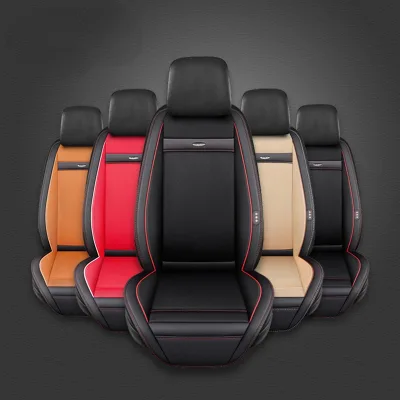


Comprehensive Sourcing Guide
Leather Heated Ventilated Car Seat Sourcing Guide
Procurement of leather heated ventilated car seats requires distinguishing between heavy-duty truck components and luxury passenger vehicle upgrades, as the supplied data reveals a mix of applications ranging from Sinotruk replacement parts to general seat cushions for brands like Benz and Toyota. Buyers must carefully align their specific vehicle requirements with the observed product attributes, noting that some listings specify "Front Row" positioning while others offer "Square" or "General Seat" configurations suitable for four-season use. The presence of "A Class" leather and customizable thickness of 1.2 ± 0.2mm indicates a tiered market where material quality varies significantly between industrial repair parts and high-end luxury interior solutions.
When evaluating listings, it is critical to verify the intended purpose, as some items are explicitly marked for "Replace/Repair" of existing truck seats, while others are designed as general seat cushions with "Business/Luxury Design" styles. The observed data shows a wide range of packaging standards, from simple "Carton Box" units to "Pallet" shipments, which directly impacts logistics planning and storage requirements for different order volumes. Buyers should not assume that all leather products possess heating or ventilation capabilities based solely on the keyword; instead, they must scrutinize the specific feature lists for terms like "Cold-resistant" or "Heat-resistant" to confirm functional performance in extreme climates.
Product Scope and Observed Listing Signals
The market for these components displays a distinct split between heavy-duty truck parts and passenger car accessories, with observed models like YG and G301 serving specific OEM needs for brands such as HOWO and Sinotruk. While some listings focus on "General Connector" types suitable for multiple vehicle brands including Honda and Kia, others are tailored specifically for Benz models with precise dimensions like 6563116cm. This divergence means that a single search query often yields results with incompatible mounting systems, requiring buyers to cross-reference the "Suitable for Car Brands" field against their fleet or personal vehicle specifications before proceeding.
Price and minimum order quantity signals further define the scope, with observed ranges spanning from $2.25 to $1115 and MOQs varying from 1 piece to 1500 units. The availability of "Any" logo customization and "Acceptable" OEM/ODM services suggests a flexible supply chain capable of handling both small prototype orders and large-scale fleet replacements. However, the presence of "Five-point Type" bound ways and specific single gross weights of 60kg or 75kg indicates that shipping costs and handling procedures will differ drastically between a single luxury cushion and a bulk shipment of truck seat assemblies.
Technical Specifications to Verify
Material integrity is paramount, yet the supplied facts present conflicting data where "Leather" is listed alongside "HDPE" material tags, necessitating a rigorous verification of the actual surface composition. Buyers must confirm the leather thickness, as one listing specifies 1.2 ± 0.2mm, while others may offer different gauges that affect durability and comfort. It is essential to request physical samples to validate the "A Class" leather claim and ensure the material meets the specific wear and impact resistance requirements for the intended vehicle environment, particularly for heavy-duty applications.
Dimensional accuracy and installation compatibility are equally critical, with observed specifications ranging from 7070105 cm to 7575130 cm for single packages. The "Easy Installation" attribute is common, but the "Seat Connector" type must match the vehicle's existing wiring and mounting points to avoid costly retrofits. Buyers should verify the "Single Package Size" and "Single Gross Weight" against their logistics capabilities, as the variance in dimensions and weights between different models like GRD-S169 and GRD-S039 can significantly affect freight costs and warehouse space allocation.
Compliance and Safety Documentation
Certification status varies across the supply base, with some products explicitly listing "ISO" certification while others mention "ISO/TSMaterial" tags that require clarification. Buyers must demand valid, up-to-date certification documents to ensure the leather and any integrated heating or ventilation components meet international safety standards. The absence of specific safety test results in the general listing data means that relying on the "ISO" label alone is insufficient; direct verification of the testing laboratory and the scope of the certification is necessary to confirm compliance with automotive safety regulations.
Safety documentation should also cover the electrical components if heating or ventilation features are present, although the provided facts focus primarily on mechanical and material attributes. The "Online Technical Support" service offered by some suppliers is a positive indicator for post-purchase troubleshooting, but it does not replace the need for pre-shipment safety audits. Buyers should ensure that the "Customized" standard options do not compromise the structural integrity of the seat, particularly regarding the "Five-point Type" binding which must withstand dynamic loads during vehicle operation.
Cost Drivers and Commercial Terms
The wide price range observed, from $2.25 to $1115, is driven by factors such as material grade, customization level, and the complexity of the seat assembly. High-end luxury designs with "Business/Luxury Design" styles and specific leather thicknesses command premium prices, whereas basic replacement parts for trucks like HOWO may be priced lower. Buyers must analyze the cost per unit against the "MOQ" requirements, as ordering 1500 units might yield a lower unit price but increases the total capital outlay and inventory risk.
Commercial terms are heavily influenced by the "prod_packing" method, with options ranging from "Carton" to "Pallet" affecting both unit cost and shipping efficiency. The "Currency" is listed as US$, but buyers should confirm if the quoted price includes all taxes, duties, and freight charges, especially given the varying origins from Jinan, Shandong to Dongguan, Guangdong. Negotiating the "After-Sales Service" terms is crucial, as the availability of "Online Technical Support" can reduce long-term maintenance costs, but the specific scope of this support must be clearly defined in the contract.
Supplier Qualification and Quality Control
Supplier location plays a significant role in quality control, with origins spanning Jinan, Shandong Province, Dongguan, Guangdong, and Jiangsu, China. Each region has different industrial specializations, and buyers should verify the supplier's specific expertise in leather processing versus plastic molding, given the mixed material data. The "Customization" availability suggests that suppliers are capable of adapting to specific client needs, but this flexibility must be balanced with strict quality control protocols to ensure consistency across large production runs.
Quality assurance should focus on the "Condition" of the product, which is listed as "New," but buyers must also verify the manufacturing process to prevent defects in the "Seat Cushion" or "Bound Way." The "Feature" list including "Wear-resistant" and "Impact-resistant" claims requires validation through third-party testing or detailed quality reports. Establishing a clear communication channel for "ODM" and "OEM" requests is essential, as the ability to accept "Any" logo and "Customizable" colors indicates a willingness to collaborate, but this must be backed by a robust quality management system.
Long-Term Procurement Checks
Sustaining a successful procurement relationship requires regular audits of the supplier's ability to maintain the "A Class" leather quality and consistent "Leather Thickness" over time. Buyers should implement a schedule for periodic sample testing to ensure that the "Cold-resistant" and "Heat-resistant" properties remain stable, especially as the supplier may adjust material sources to manage costs. The "Single Gross Weight" and "Single Package Size" should also be monitored to detect any changes in packaging efficiency that could impact logistics costs and product protection during transit.
Long-term checks must also include a review of the "After-Sales Service" performance, ensuring that "Online Technical Support" remains responsive and effective for any installation or functional issues. As the market evolves, buyers should reassess the "Standard" compliance of the products, particularly if new automotive regulations are introduced that affect seat safety or material composition. Maintaining a flexible supply chain that can accommodate "Customized" orders while adhering to strict quality benchmarks will be key to managing the risks associated with the diverse product range observed in the market.
FAQs
Can I customize the leather heated ventilated car seat with my own logo?
Yes, customization is available for logos and designs. The product supports OEM and ODM services, allowing buyers to apply any specific branding. This flexibility ensures the seats align with your brand identity. You can request custom colors and styles to match your vehicle interior requirements effectively.
What is the minimum order quantity for these car seats?
The minimum order quantity is one piece. This low MOQ allows buyers to test quality or order small batches easily. It supports flexible procurement strategies for both individual repairs and small fleet updates. You can start with a single unit before scaling up your order volume significantly.
Which certifications do these leather car seats hold?
These seats hold ISO certifications. This indicates adherence to recognized quality management standards. Buyers can rely on consistent manufacturing processes and material quality. The certification provides assurance for international trade compliance and helps in meeting specific industry requirements for automotive components.
What is the typical packaging method for these seats?
The seats are packed in carton boxes or on pallets. This packaging protects the leather and internal components during transit. The method ensures safe delivery to various locations. Buyers receive the product securely, minimizing the risk of damage during shipping and handling processes effectively.
Where are these car seats manufactured?
These seats are manufactured in China, specifically in regions like Jinan, Shandong, and Dongguan. This location offers established supply chains for automotive parts. Buyers benefit from efficient logistics and competitive pricing due to the manufacturing hub's infrastructure and expertise in vehicle component production.
What after-sales service is provided for these seats?
Online technical support is provided for after-sales service. Buyers can receive assistance with installation or troubleshooting remotely. This support helps resolve issues quickly without requiring physical visits. It ensures continuous operation and customer satisfaction throughout the product lifecycle effectively.